Duramax Tuner & Programmer Buyer's Guide: Tunes, Monitors & Doing It Right
How to choose a tuner or programmer for your GM 6.6L Duramax — what a tune actually changes, EFILive vs. handheld vs. cloud tuners, transmission and towing tunes, gauges and monitoring, and the supporting hardware a tune commands. Legal, off-road, and emissions framing explained.
Parts Covered in This Guide
Restoring boost or chasing more power

Restoring fueling or building for power

Reliable fueling at stock or elevated power

Reliable fueling at stock or elevated power
| # | Product | Owner Reviews | Availability | Best For | |
|---|---|---|---|---|---|
| 1 | 406 | $23.00 In Stock at Amazon | Restoring boost or chasing more power | ||
| 2 | 10 | $15.99 In Stock at Amazon | Restoring fueling or building for power | ||
| 3 | 4,290 | $21.00 In Stock at Amazon | Reliable fueling at stock or elevated power | ||
| 4 | 193 | $14.88 In Stock at Amazon | Reliable fueling at stock or elevated power |
A tuner is the single part that changes a Duramax the most for the money — and the one most likely to be bought for the wrong reasons. It doesn’t bolt on power the way a turbo or injectors do; it rewrites the instructions the truck already follows, telling the fuel, air, and transmission hardware you own to behave differently. Done right, a good tune wakes up a sluggish tow rig, sharpens throttle response, and fixes the factory transmission’s worst towing habits. Done wrong — or without the gauges to watch what it’s doing — it’s the fastest way to cook an EGR cooler, a turbo, or a transmission. This guide covers how tuners work, how to choose one, and how to run one responsibly.
What a Tune Actually Changes
The 6.6L Duramax is run by an engine control module (ECM) and a transmission control module (TCM), each following a factory calibration built for emissions, longevity, and a broad range of drivers. A tuner replaces or overlays that calibration. The levers it pulls:
- Fuel — injection timing, pulse duration, and rail pressure. More fuel, delivered at a better time, is where power and throttle response come from.
- Air — boost targets and turbo behavior, so the airflow matches the added fuel.
- Torque management — the factory limits torque in lower gears and certain conditions to protect the driveline; tunes raise or reshape those limits.
- Transmission — shift points, shift firmness, and torque-converter lockup. This is the underrated half of tuning. A towing tune that locks the converter sooner and holds a gear on a grade does more for a loaded truck than raw horsepower.
The key mental model: a tune is the brain, not the muscle. It commands hardware. It cannot conjure fuel the pump and injectors can’t flow, or boost the turbo can’t build. That’s why tune choice and supporting hardware have to be planned together.
The Three Kinds of Tuners
Custom-tuning platforms (EFILive). The enthusiast standard on the older trucks (LB7 through LML), EFILive lets a tuner write and load custom calibrations — often paired with the AutoCal handheld so you can switch tunes without a laptop. It’s the most capable and the most demanding: you’re either buying pre-built tunes from a reputable tuner or learning to tune yourself. This is the path for owners who want a tune matched to their exact build and fuel.
Cloud / app-based tuners (EZ LYNK and similar). Popular on the later LML (2011–2016) and L5P (2017+) trucks, where the factory ECM is locked down harder, these use a device that plugs into the OBD-II port and a phone app to load a tuner’s custom calibration remotely. Convenient, support-driven, and built for the generations where traditional tuning is hardest.
Handheld programmers (Bully Dog, Edge, Banks Power, and others). Plug-in-and-go devices with pre-loaded canned tunes — usually a few power levels plus gauges and diagnostics. Less customizable than a custom platform, but the simplest way to get a proven tune and live monitoring in one box. A solid choice for a mostly-stock truck that mainly needs a better towing calibration and gauges.
Match your engine code to the platform — the generations & fitment reference spells out which trucks are LB7/LLY/LBZ/LMM versus LML/L5P, because tuner support splits along exactly those lines.
Tuner Support by Generation
Support tracks the ECM’s security, not the calendar year — the newer and more locked-down the ECM, the narrower the field of platforms that can reach it.
| Engine code | Years | ECM lockdown | Best-supported platforms |
|---|---|---|---|
| LB7 | 2001–2004 | None — the earliest, simplest ECM to access | EFILive, handheld programmers |
| LLY | 2004.5–2005 | Light | EFILive, handheld programmers |
| LBZ | 2006–2007 | Light — the open ECM the aftermarket built itself around | EFILive, handheld programmers |
| LMM | 2007.5–2010 | Moderate — active DPF regeneration adds complexity | EFILive, handheld programmers |
| LML | 2011–2016 | Heavy | Cloud/app-based platforms, select EFILive support |
| LGH | 2011–2016 (van/chassis-cab) | Heavy — same architecture as the LML | Cloud/app-based platforms, same ecosystem as the LML |
| L5P | 2017+ | Heaviest — encrypted ECM | Cloud/app-based platforms almost exclusively |
Order support by engine code, not model year or body style — a 2007 truck can be an LBZ or an LMM, and the LGH shares the LML’s tuning ecosystem despite living in a van or chassis-cab. The VIN & engine-code decoder confirms which one you have in about thirty seconds.
Tuner or Programmer — Is There a Difference?
Not a meaningful one in most conversations. “Programmer” traditionally describes a handheld, plug-in-and-go device loaded with a small set of pre-built power levels — the Bully Dog and Edge style of product. “Tuner” is the broader term, and it also covers custom-tuning platforms like EFILive and cloud/app-based devices like EZ LYNK. Every programmer is a tuner; not every tuner is a programmer. If you’re searching for “a Duramax programmer” specifically, you’re most likely looking for the handheld category below — the simplest of the three to own.
Which Type Suits You
There’s no universal “best” tuner — the right platform depends on your engine’s generation and what you actually want out of it.
| Your priority | Best-suited type | Why |
|---|---|---|
| Maximum customization on an LB7–LML | Custom platform (EFILive) | Full read/write access and unlimited custom calibrations |
| An L5P, or any locked-down ECM | Cloud/app-based (EZ LYNK and similar) | The only category with meaningful support on encrypted ECMs |
| Simplicity — no tuning knowledge required | Handheld programmer | Plug in, pick a power level, get gauges — done |
| Towing, with minimal driver input | Handheld or cloud tune with a dedicated tow mode | Transmission-focused calibration and live trans-temp readout |
| Emissions-compliant daily driving | A tune that retains stock aftertreatment | Keeps the DPF/SCR system functioning; mileage-oriented calibration |
Whatever you land on, match it to your engine code first using the table above — a platform that can’t reach your ECM isn’t a real option, however well it reviews.
Legal, Off-Road, and Emissions — Read This Part
Tuning and emissions are two separate things that get tangled together. A calibration that keeps the factory emissions equipment intact and working — many towing, mileage, and drivability tunes — is a different animal from a modification that disables or removes emissions controls. The latter is restricted under federal and many state laws and is sold strictly for closed-course, competition, or off-road use.
Our position is simple: keep street-registered trucks emissions-compliant, know the law where you drive and register, and treat any emissions-related change as your legal responsibility. If your EGR system is the actual problem, the honest fix is a working system — see the EGR & cooling guide — not a defeat. This guide is about how tuners work and how to pick one, not how to break emissions law.
Gauges First: You Can’t Manage What You Can’t See
Before you lean on any tune, you need eyes on what it’s doing. The three numbers that matter most:
- Exhaust gas temperature (EGT) — the single most important protective gauge on a diesel. A tune can ask for more fuel than the factory ever did, and EGT is what tells you to back off before pistons and the turbo get hot on a long, loaded pull.
- Boost — confirms the turbo is delivering the air the tune expects, and reveals a boost leak or an overspeeding turbo.
- Transmission temperature — the towing killer. Heat is what kills a Duramax Allison, and a tune plus a trailer can make heat fast.
Many handheld and cloud tuners display these live; if yours doesn’t, add a pillar-pod gauge set. Monitoring isn’t an accessory on a truck that works — it’s the difference between a tune that lasts and an expensive lesson. Pair it with the service discipline in the maintenance schedule.
Match the Tune to the Hardware
A mild street or towing tune on a healthy stock truck often needs nothing but the tune and gauges. The trouble starts when the tune outruns the hardware:
- More fuel than the fuel system can supply starves the rail — the pump and injectors have to flow it. Read the fuel-system upgrades top-list before chasing big fuel numbers, and mind the CP3 vs. CP4 realities on which pump you’re asking to work harder.
- More boost than the stock turbo wants to make pushes it out of its efficient range and heat-soaks the intake — see the turbo upgrade guide, feed it with adequate airflow, and give it somewhere to go with a free-flowing exhaust — backpressure the tune cannot see is what turns extra fuel into EGT.
- More torque than the transmission and its cooling can take is how loaded trucks slip and cook the Allison. Transmission tuning and cooling go together.
The order most owners get right: gauges and a conservative tune first, then supporting hardware as you climb, then a tune revised to match the new parts. Don’t buy injectors and a big turbo to chase a number a canned tune won’t safely command — plan the package. The common problems by generation guide is a good reality check on what each engine can and can’t take.
Buying a Used Tuner
Most of the platforms above turn up used, and buying one right avoids a device you can’t actually activate:
- Confirm it’s unlocked and unmarried from the seller’s truck. Most platforms tie a license to a single vehicle’s VIN, and some require a dealer-level or manufacturer-level process to release it before it will work on yours.
- Ask the seller to revert their truck to the factory calibration before shipping. A seller who does this is doing the sale right — see the FAQ below on why that’s always possible.
- EFILive setups are tied to hardware, not just software. Confirm the AutoCal dongle’s license, not just the laptop software, is what’s transferring — the two aren’t always sold together.
- Cloud/app-based devices (EZ LYNK and similar) are enrolled online. Confirm the listing includes the brand’s specific transfer or account-reset steps; an un-transferred device may not re-enroll to a new truck or VIN.
- Match the platform to your exact engine code using the table above before buying — a used tuner built for the wrong generation’s ECM is dead stock, not a bargain.
Where to Buy
- New tuners, gauges, pillar pods, and the supporting hardware a tune commands: Amazon Automotive — start in the tuners category and the recommended supporting parts below. (No tuner-specific stock is listed yet; the parts below are the fuel, injector, and turbo hardware a tune actually drives.)
- Used and discontinued tuners by platform: eBay Motors is the right marketplace for pre-owned EFILive/AutoCal units, EZ LYNK Auto Agents, Bully Dog/Edge/Banks Power handhelds, and Allison transmission tuning hardware — use the platform-tagged buttons above and the used-buying checklist before you commit.
Shopping used or OEM? Try eBay Motors
Live listings for the parts covered in this guide — prices set by the seller.
Live auctions ending soon
LIVEReal-time eBay auctions · bids shown are current · tap a card to bid on eBay
Browse every live “efilive autocal duramax lb7 lly lbz lmm” listing on eBay →
Recommended Parts for This Guide
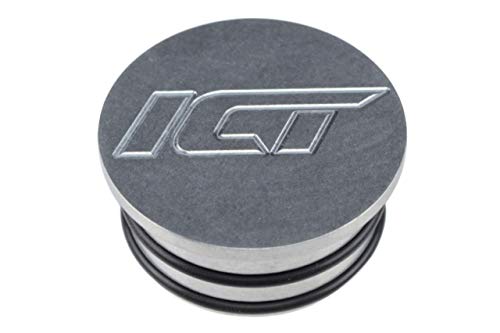
ICT Billet Duramax Turbo Diesel 2004.5-10 LBZ LLY LMM Mouth Piece Resonator Noise Reduction Plug Cover Cap 6.6L Seal Billet Aluminum Made in America ICT Billet 551503
406 owner reviews
ICT Billet Duramax Turbo Diesel 2004.5-10 LBZ LLY LMM Mouth Piece Resonator Noise Reduction Plug Cover Cap 6.6L Seal Billet Aluminum Made in America ICT Billet 551503. Turbocharger hardware for the Duramax — restore lost boost or add drop-in and compound turbo power.
- Restores lost boost
- Drop-in & upgrade options
97328733 Fuel Return Connector Kit Fit for Duramax Sprinter | Fit for Sprinter OM612 OM647 Duramax LLY LMM LBZ, OE# A6120703032 97328733, heavy duty 4-cylinder metal injector leak off kit
10 owner reviews
97328733 Fuel Return Connector Kit Fit for Duramax Sprinter | Fit for Sprinter OM612 OM647 Duramax LLY LMM LBZ, OE# A6120703032 97328733, heavy duty 4-cylinder metal injector leak off kit. Fuel injector hardware for the GM Duramax diesel — restore stock fueling or step up to high-flow injectors for more horsepower.
- Restores stock fueling
- High-flow options for power
GM Genuine Parts TP1015 (13539108) Fuel Filter Kit with Seals
4,290 owner reviews
GM Genuine Parts TP1015 (13539108) Fuel Filter Kit with Seals. Fuel-system hardware to keep the Duramax fed reliably at stock and elevated power.
- Reliable fuel delivery
- Supports higher power
Water in Fuel Indicator Sensor, Fuel Filter Sensor Compatible with 2001-2011 Silverado Sierra Truck 2500 2500HD 3500 3500HD 6.6L V8 Duramax Diesel Engine Fuel Filter (12-Sided)
193 owner reviews
Water in Fuel Indicator Sensor, Fuel Filter Sensor Compatible with 2001-2011 Silverado Sierra Truck 2500 2500HD 3500 3500HD 6.6L V8 Duramax Diesel Engine Fuel Filter (12-Sided). Fuel-system hardware to keep the Duramax fed reliably at stock and elevated power.
- Reliable fuel delivery
- Supports higher power